Most people who search for endoscopic spine surgery in India arrive with the same story. An MRI has come back showing a disc pressing on a nerve. Someone has mentioned an operation. And somewhere in the middle of all that, a relative or a YouTube video has suggested there is now a way to fix the problem through a cut the size of a shirt button.
The technique is real, it is well established, and it is available in far more of India than it was five years ago. It is also oversold. A large share of what ranks for this keyword is written for medical tourists and priced in dollars, and almost none of it tells you the one thing that actually matters: whether your particular spine problem is suited to it.
Note: This guide is written for the other reader — the person in India deciding what to do next.
What endoscopic spine surgery actually is:
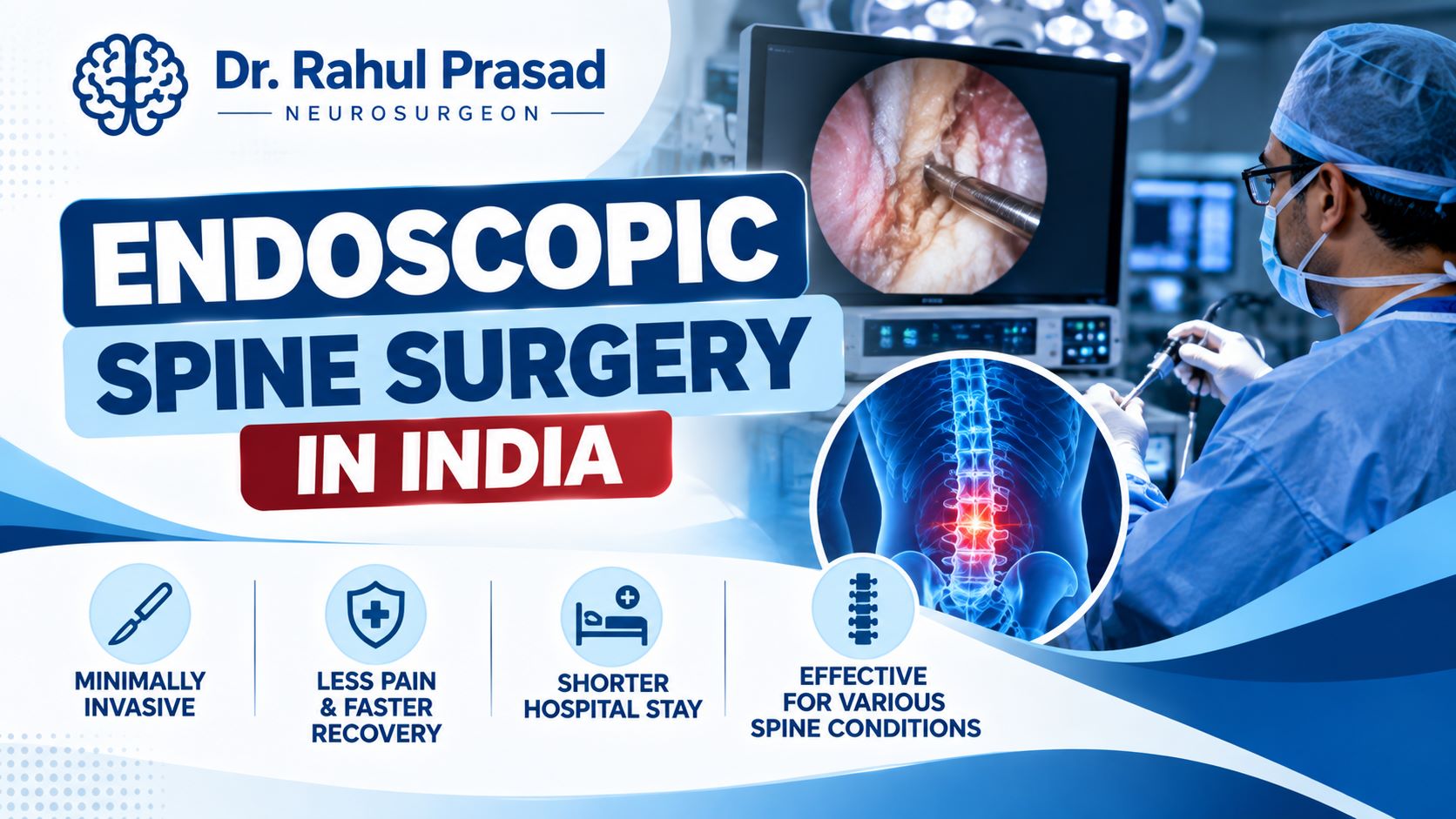
Endoscopic spine surgery treats nerve compression in the spine through a single keyhole opening, usually under 10 mm, using a rod-shaped camera that carries its own light, irrigation and working channel. The surgeon operates while watching a high-definition screen, and the instruments pass down the inside of the endoscope itself.
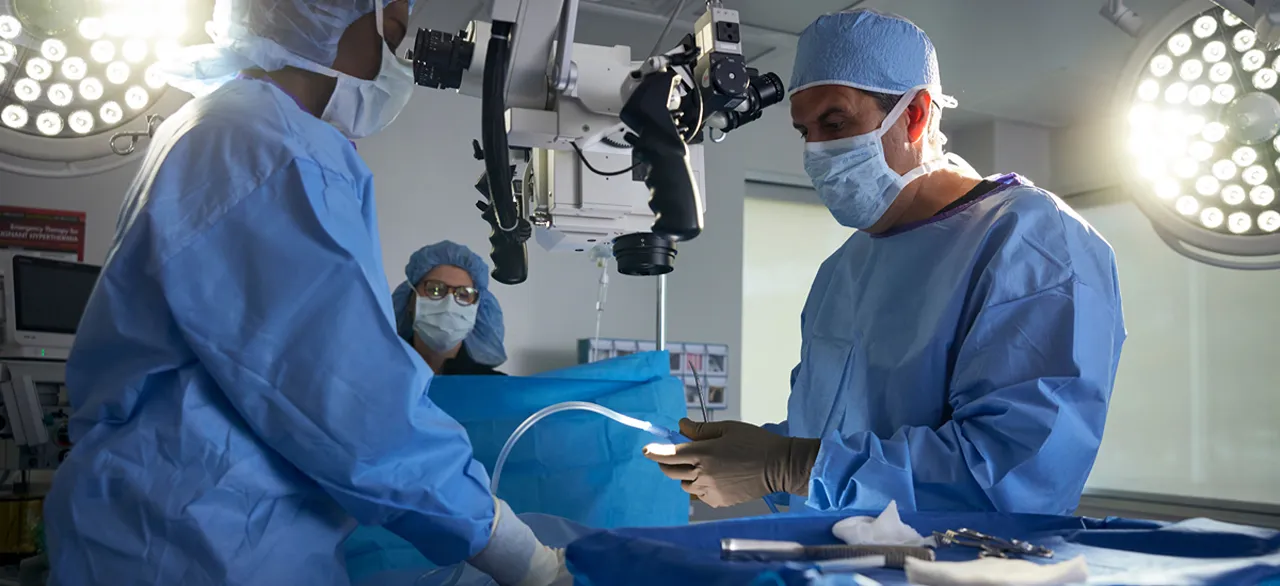
That last detail is what separates it from everything that came before. In conventional open spine surgery, the muscles along the spine are peeled off the bone and held apart with retractors so the surgeon can see directly. Most of the post-operative pain and the long recovery come from that muscle damage, not from the work done on the disc. Endoscopic surgery reaches the same disc and the same nerve by sliding between the muscle fibres instead of stripping them.
It is worth being precise about one thing, because the terms get used loosely. Minimally invasive spine surgery (MISS) is the broad family; endoscopic spine surgery is one branch of it. Tubular microdiscectomy, done through a 2 cm tube with a microscope, is also minimally invasive — but it is not endoscopic. When a hospital says “minimally invasive”, it is worth asking which of the two they mean.
Most endoscopic procedures are done under local anaesthetic with sedation, or under spinal anaesthesia, rather than general anaesthesia. For an eighty-year-old with a heart condition, that single fact can be the difference between being operable and not.
*Experiencing persistent back pain, sciatica or nerve compression due to a slipped disc? Explore slip disc treatment options in Siliguri and understand how minimally invasive and endoscopic procedures may help suitable patients.
Why everyone calls it something different:
This is the most common source of confusion, and almost nobody explains it. One surgeon in Delhi calls it PSLD. Another in Pune calls it UBE. A clinic in Kochi advertises laser spine surgery. A patient reasonably assumes these are three different operations in competition with each other. They are not — they are variations on the same idea, distinguished mainly by how many openings are used and what the surgeon is trying to reach.
| Name you may hear | What it means in practice |
|---|---|
| TELD (transforaminal endoscopic lumbar discectomy) | One opening, approached from the side through the natural nerve exit window. Classic choice for a herniated disc pressing sideways on a nerve root. |
| Interlaminar endoscopic discectomy | One opening, approached from behind through the gap between two vertebral arches. Often used at the L5–S1 level, where the side approach is blocked by the pelvis. |
| PSLD (percutaneous stenoscopic lumbar decompression) | A single-portal endoscopic technique developed for stenosis rather than a simple disc bulge — it is used to shave away thickened ligament and overgrown bone that are narrowing the spinal canal. |
| UBE / biportal endoscopy | Two small openings instead of one: the camera goes through one, the instruments through the other. Gives the surgeon more freedom of movement, at the cost of a second puncture. |
| SELD (laser spine surgery) | A very fine flexible scope passed through the epidural space, usually from the tailbone, with a laser fibre used to shrink or release tissue. A separate tool for a narrower set of problems — not a general substitute for decompression. |
| “Keyhole spine surgery” | Marketing shorthand. It tells you nothing about which of the above is being proposed. |
The practical takeaway: do not shop by acronym. The right technique is dictated by which level of your spine is affected, whether the problem is a soft disc or hard bone, and whether the compression is central or out in the nerve canal. A surgeon who performs only one of these techniques will tend to recommend it for everything. A surgeon trained in several will pick by anatomy — and that is the better conversation to be in.
Which conditions it treats well
Endoscopic surgery is a decompression operation. It is at its best when a specific structure is squeezing a specific nerve and that structure can be removed through a narrow corridor. In practice, that means:
- Herniated or slipped disc causing sciatica or radiating arm pain, where the leg or arm pain is clearly worse than the back or neck pain
- Lumbar canal stenosis, particularly the classic pattern of legs that ache and give way after a few minutes of walking and settle when you sit or lean forward
- Foraminal stenosis — narrowing of the side channel the nerve root exits through
- Cervical disc problems in selected cases, where the compression is confined to one or two levels
- Thickened ligamentum flavum and facet overgrowth contributing to canal narrowing
- Recurrent disc herniation at a previously operated level, in experienced hands, because the endoscope can often work around scar tissue rather than through it
Who is not a good candidate:
Endoscopic surgery removes pressure. It does not stabilise, realign or rebuild. If the underlying problem is mechanical rather than compressive, a keyhole decompression will not fix it and may make it worse. You are generally not a candidate if you have:
- Significant spinal instability — a vertebra sliding on the one below, or movement visible on flexion-extension X-rays. These usually need fusion.
- High-grade spondylolisthesis, for the same reason.
- Multi-level disease requiring correction, such as adult scoliosis or kyphotic deformity.
- Spinal tumours or active spinal infection, where the goal of surgery is different.
- Severe, heavily calcified central stenosis across several levels, where the volume of bone to be removed exceeds what a single portal can safely handle.
- Back pain without nerve compression. If your MRI shows wear and tear but your pain does not follow a nerve, no decompression — endoscopic or open — is likely to help.
There is also a quieter group: people whose scans look operable but whose symptoms have not been given a fair trial of conservative treatment. Most disc herniations settle within six to twelve weeks with physiotherapy, time and appropriate medication. Surgery earns its place when symptoms persist beyond that, when there is progressive weakness, or when there is loss of bladder or bowel control — which is an emergency and needs same-day attention.
*A surgeon who tells you that you are not suitable is giving you more useful information than one who tells you that you are.
What the day of surgery looks like
Patients tend to imagine a far bigger event than it is, so it helps to see the shape of it.
You are usually admitted the same morning. Positioning is done carefully, because the surgeon works from fluoroscopic images and the angles matter. The skin opening is made with a needle and dilators rather than a scalpel sweep; the endoscope is docked at the target under X-ray guidance. The decompression itself typically takes somewhere between forty minutes and two hours depending on technique and complexity.
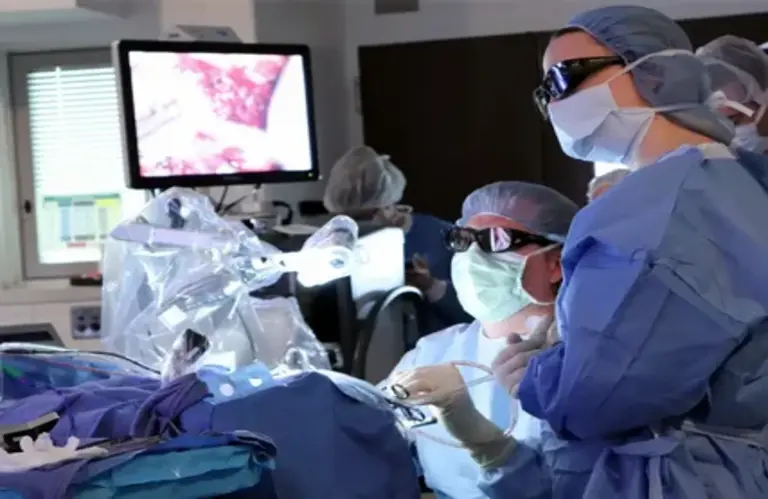
Because many of these cases are done awake under sedation, it is not unusual for the surgeon to ask you during surgery whether the leg pain has gone. For a condition you may have lived with for a year, that moment is genuinely striking.
Most patients are walked to the bathroom within a few hours. Discharge is commonly the same evening or the following morning, with a dressing rather than a line of stitches.
*Considering endoscopic spine surgery and looking for an experienced specialist? Discover how to choose the best neurosurgeon near you in Siliguri and what qualifications and experience to evaluate before treatment.
What endoscopic spine surgery costs in India:
Published figures are all over the place, and it is worth understanding why before you read any number. Apollo’s own procedure page puts the average cost of endoscopic spine surgery in India in the range of roughly ₹1,00,000 to ₹3,00,000. Medical-tourism portals quote considerably more, often between USD 4,200 and USD 12,000, because those packages are built for international patients and bundle airport transfers, interpreters, accommodation and coordinator fees that a domestic patient does not pay for.
For a patient in India, a single-level lumbar endoscopic decompression at a private hospital usually sits in the lower-to-middle part of that first range. What moves the figure is fairly predictable:
- How many levels are being decompressed
- Which technique — biportal needs more instrumentation than a single portal; laser adds consumable cost
- Whether any implant is used, which changes the economics completely
- City and hospital tier — the same operation in a metro corporate hospital and in a well-equipped tier-2 hospital are not priced alike
- Anaesthesia type and length of stay
- What your scans require pre-operatively, and whether you need post-operative physiotherapy
Treat any number you see online, including the ones above, as a starting point for a conversation rather than a quotation. Ask any hospital for a written estimate that separates surgeon’s fee, anaesthesia, OT charges, implants or consumables, room category and post-operative care. If a quote cannot be broken down that way, that itself tells you something.
Does health insurance cover it?
In most cases yes, because it is a recognised surgical procedure for a documented condition rather than an elective one. Two things commonly cause trouble. The first is the 24-hour hospitalisation rule that older policies apply — an endoscopic case discharged in eight hours can be queried, so the hospital’s TPA desk should be told in advance and the admission documented properly. The second is a waiting period on pre-existing conditions, which catches people who have had back trouble on record for years. Get pre-authorisation in writing before the date is fixed, not after.
Recovery: What The Weeks Actually Look Like
Every page promises “faster recovery” and then stops. Here is a more honest shape, for an uncomplicated single-level lumbar decompression. Your surgeon’s instructions override all of this.
Day 0 to 2: Walking the same day. Leg pain is often dramatically better immediately; a dull ache at the puncture site is normal and is not a sign something is wrong. Short, frequent walks beat lying still.
Week 1: Dressing care, no bending forward, no lifting, no long car journeys. Most people are off strong painkillers within a few days. Desk work from home is often possible by the end of this week if you can change position freely.
Weeks 2 to 4: Back to an office, driving short distances once you can brake without hesitation, light household activity. Structured physiotherapy usually begins in this window and matters more than most patients expect — the decompression removes the cause, the rehabilitation restores the function.
Weeks 6 to 12: Gradual return to lifting, gym work, long travel and physically demanding jobs, guided by your physiotherapist. Numbness and weakness that were present before surgery recover on the nerve’s own timetable, which can run to months; pain usually improves long before sensation does.
Two honest caveats. Published success rates for well-selected cases are high — most series report figures in the 85–95% range for conditions such as lumbar disc herniation and foraminal stenosis — but that depends entirely on selection. And recurrence is possible: a disc that has herniated once can herniate again, which is why the rehabilitation and the weight and posture advice are part of the treatment, not an optional extra.
How to check that a surgeon is genuinely trained in this:
Endoscopic spine surgery has a long learning curve. The equipment has spread through Indian hospitals faster than the training has, and the gap between a surgeon who has done a structured fellowship and one who bought a scope is not visible from a website. Some questions that will tell you a great deal, politely asked:
- Where did you train in this specifically, and for how long? A dedicated fellowship — commonly in South Korea, Germany, the USA, or at one of the established Indian endoscopic centres — is a different thing from a weekend cadaver workshop.
- Which techniques do you perform? A surgeon who offers transforaminal, interlaminar and stenosis-directed decompression can choose by anatomy. One who does a single technique will fit you to it.
- How many of these do you do in a month? Volume matters in this field more than in most.
- Why this approach for my scan, and what is the alternative? You should be able to follow the reasoning.
- What is your conversion plan? Occasionally an endoscopic case has to be converted to an open or tubular procedure mid-surgery. A surgeon who is also a trained open and complex spine surgeon can finish the job safely. One who only does endoscopy cannot.
- What happens if I decide not to operate? The answer should be specific to your condition, not a warning.
You May Not Need To Travel To A Metro City:
For a long time the honest answer to “where do I get this done in India?” was Delhi, Mumbai, Hyderabad, Bengaluru, Pune or Chennai. That is no longer the whole picture, and the assumption costs patients real money — flights, weeks of accommodation for a family attendant, and follow-up visits that end up being done over the phone because nobody wants to make the journey twice.
For patients across North Bengal, Sikkim, the Dooars, Bihar’s northern districts and much of the North East, Siliguri is the practical referral hub, and endoscopic spine surgery is now performed there. Dr. Rahul Prasad practises as a Senior Neurosurgeon and Spine Surgeon at Yuvaan Hospital, Siliguri. He completed MS General Surgery at Banaras Hindu University and MCh Neurosurgery at G.B. Pant Hospital, New Delhi, followed by a clinical fellowship in Minimally Invasive and Complex Spine Surgery at Temple University Hospital, Philadelphia, and a dedicated endoscopic and laser spine fellowship — PSLD and SELD — in South Korea. Before moving to Siliguri he worked as a consultant neurosurgeon at Max Super Speciality Hospital Saket in New Delhi, Yashoda Hospital in Delhi NCR, Wockhardt Hospital in Goa and Rajasthan Hospital in Ahmedabad.
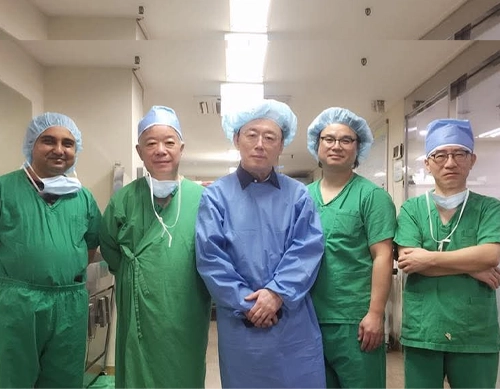
That combination matters for the reason set out above: alongside endoscopic work he performs complex and instrumented spine surgery, so the recommendation you get is not constrained by the only tool available.
If you are weighing up a metro referral, it is worth at least getting a local opinion on your MRI first. If you are a candidate for keyhole surgery, there may be no reason to travel. If you are not, you will have found that out before buying tickets.
Frequently asked questions:
Is endoscopic spine surgery safe?
For appropriately selected patients it is a well-established procedure with a lower rate of blood loss, wound infection and post-operative pain than open surgery. It is still surgery near a nerve, and the recognised risks — nerve irritation, dural tear, incomplete relief, recurrence — have not been abolished. Safety in this field depends less on the technique than on case selection and the surgeon’s training.
How is it different from minimally invasive spine surgery?
Minimally invasive spine surgery is the umbrella term. Endoscopic surgery is the subset done through a camera inside a single narrow working channel. A tubular microdiscectomy done with a microscope through a 2 cm retractor is minimally invasive but not endoscopic. Both are far gentler than open surgery; the endoscopic opening is the smaller of the two.
How long will I be in hospital?
Most uncomplicated single-level cases are discharged the same evening or the next morning.
Is there an age limit?
No. Age by itself is rarely the deciding factor — many of the patients who benefit most are in their seventies and eighties with lumbar canal stenosis, precisely because the procedure can often be done without general anaesthesia. What matters is the anatomy of the problem and overall fitness, assessed case by case.
Can it treat neck problems as well as the lower back?
Yes, in selected cases. Cervical disc problems can be approached endoscopically when the compression is limited to one or two levels, though the lumbar spine remains the more common territory.
Can the disc herniate again after surgery?
Yes. A disc that has prolapsed once can prolapse again at the same level, which is why weight, posture, core strengthening and lifting technique are part of the treatment rather than advice to be filed away.
Before You Decide:
The useful question is not “should I have endoscopic spine surgery?” It is “what is compressing which nerve, and what is the least invasive way to take that pressure off?” Answer the second question properly and the first one answers itself.
Bring your MRI films and report, a list of what you have already tried, and a clear description of where the pain travels and what makes it better or worse. If you are in Siliguri, North Bengal, Sikkim or the North East and you have been told you need spine surgery, you can book a consultation with Dr. Rahul Prasad at Yuvaan Hospital to find out whether a keyhole approach is an option in your case — and what the alternatives are if it is not.
Yuvaan Healthcare Pvt. Ltd., Plot No. 392, Village Kawakhari, Medical More, PS Matigara, PO Sushrutnagar, Siliguri, West Bengal 734012
Phone: +91 74777 91481 · +91 74777 91482 · +91 96095 44058
Email: yuvaanhealthcare@gmail.com
OPD: Monday to Saturday, 10:00 AM to 6:00 PM
Book an appointment
This article is for general information and does not replace an individual medical consultation. Treatment decisions should be made with a qualified spine surgeon after reviewing your imaging and clinical examination.