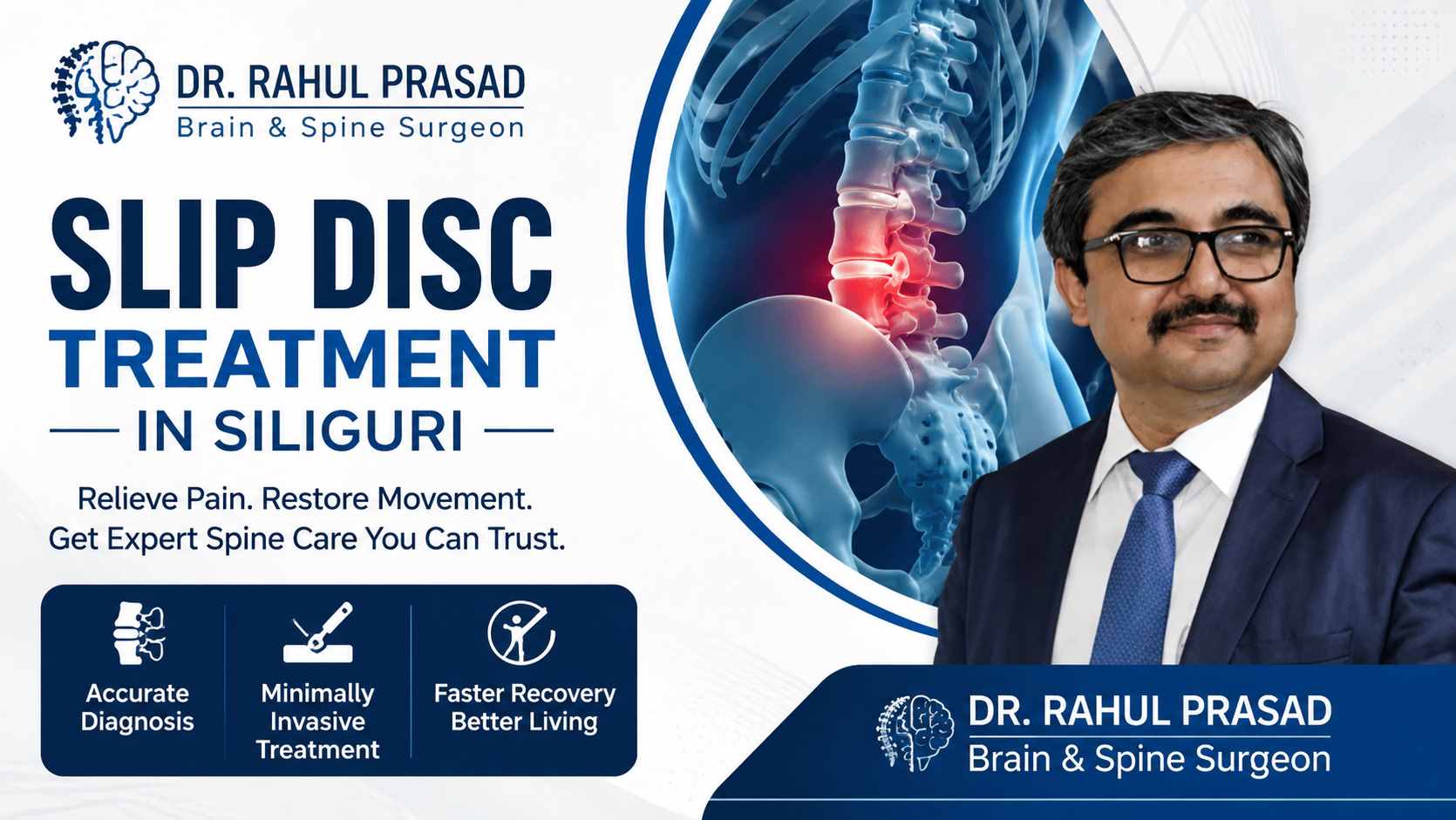
There’s a particular kind of panic that hits when you bend down to pick something up and suddenly can’t straighten back up. Or when a sharp, shooting pain runs from your lower back down one leg and won’t let go. If a scan report just told you the word “herniated” or “slipped disc,” and you end up looking for slip disc treatment in Siliguri at midnight trying to make sense of it, take a breath — this is one of the most common and most treatable spine problems out there, and you don’t need to travel out of North Bengal to deal with it properly.
What actually happens when a disc “slips”?
The term is a bit misleading, honestly — nothing really “slips” out of place like a tile sliding off a roof. What happens is the soft, jelly-like centre of one of the discs between your spinal bones pushes out through a weak spot in its tougher outer layer, and that bulge can press on a nearby nerve. Depending on where it happens — lower back or neck — the pain shows up differently. A lumbar slip disc typically sends pain down the leg (that’s the classic sciatica everyone talks about), while a cervical one can send it into the shoulder and arm instead.
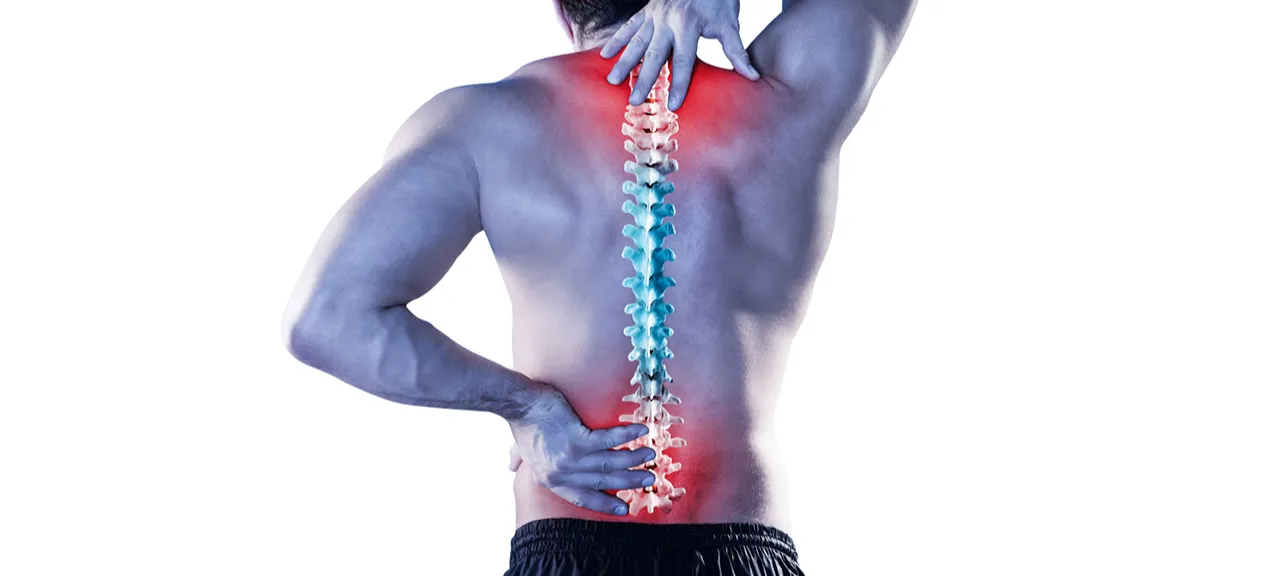
It’s also worth knowing this isn’t just an “old person’s problem” anymore. A huge chunk of people looking into slip disc treatment in Siliguri these days are in their late twenties and thirties — desk jobs, long hours slouched in front of a laptop, and barely any movement through the day all add up faster than people expect.
*Want to understand your condition better? Explore our detailed guide to slipped disc and herniated disc treatment.
Signs it’s time to actually get it checked:
A lot of people push through mild back pain for weeks, assuming it’ll settle with rest. And often it does. But there are certain signs that mean it’s worth booking a proper consultation for slip disc treatment in Siliguri instead of waiting it out:
- Pain that shoots down one leg or arm, past the knee or elbow
- Numbness, tingling, or a “pins and needles” feeling in the leg, foot, arm, or hand
- Weakness — trouble lifting your foot while walking, or dropping things unexpectedly
- Pain that gets noticeably worse when sitting, coughing, or sneezing
- Any loss of bladder or bowel control (this one needs urgent attention, not a wait-and-watch approach)
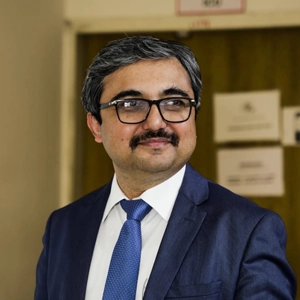
If any of that sounds familiar, it’s genuinely worth seeing a specialist rather than relying on painkillers indefinitely. Dr. Rahul Prasad, Senior Neurosurgeon and Spine Surgeon at Yuvaan Hospital, deals with these cases with less invasive treatment down the line.
Why people specifically choose Dr. Rahul Prasad for this
Plenty of doctors will look at a back pain complaint and hand out muscle relaxants without digging much deeper. What sets Dr. Prasad apart is the depth of training behind his approach to slip disc treatment in Siliguri. He completed his MS in General Surgery from BHU, his MCh in Neurosurgery from G.B. Pant Hospital New Delhi, and then went further — a Clinical Fellowship in Minimally Invasive and Complex Spine Surgery at Temple University Hospital in the USA, followed by an Endoscopic and Laser Spine Fellowship (PSLD & SELD) in South Korea. He’s among the first Indian surgeons to bring that particular endoscopic training back to India.
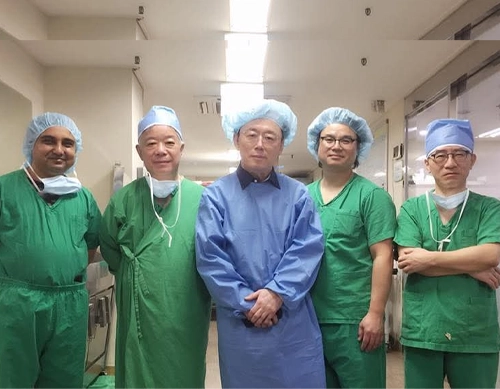
Practically, that means when someone comes in for slip disc treatment in Siliguri, they are not getting a generic “rest and see” response — they are getting an assessment from someone who’s actually trained under leading international spine surgeons and understands the full range of options, from conservative management right through to advanced minimally invasive procedures. People from across North Bengal — Jalpaiguri, Darjeeling, even parts of Sikkim — now travel into Siliguri for this instead of heading straight to Kolkata or Delhi.
*Not all disc problems are the same—learn how cervical and lumbar disc conditions affect the spine differently.
What can you actually expect at your first visit?
The first appointment isn’t as intimidating as people assume. It starts with a proper conversation — where exactly the pain is, when it started, whether it travels anywhere, what makes it worse, and whether there’s any numbness or weakness involved. From there, Dr. Prasad does a focused neurological exam, checking reflexes, strength, and sensation to figure out which nerve, if any, is actually being affected.
Not everyone needs an MRI on day one, and that’s actually a reassuring sign rather than a red flag — it means the approach is tailored to the individual case, not a standard checklist applied to everyone. When imaging is genuinely needed, an MRI gives a clear picture of exactly where the disc is bulging and how much pressure it’s putting on the nerve. That clarity is what makes slip disc treatment in Siliguri here feel less like guesswork and more like an actual plan.
Most patients don’t walk in and hear the word “surgery.” The majority are managed with a mix of medication, physiotherapy, activity modification, and targeted exercises first. Surgery only becomes part of the conversation when conservative treatment genuinely isn’t working, or when there’s significant nerve compression that scans confirm.
If it does need more than physiotherapy
This is where Dr. Prasad’s specific training really comes into play. For cases where a disc is pressing on a nerve and conservative treatment hasn’t given relief, he specialises in a minimally invasive endoscopic technique called PSLD (Percutaneous Stenoscopic Lumbar Decompression) — done through an incision of roughly 9 millimetres, compared to the much larger cut needed in traditional open spine surgery.
What that means for someone going through slip disc treatment in Siliguri: less muscle and tissue damage, lower blood loss, considerably less pain after the procedure, a shorter hospital stay, and a noticeably faster return to normal life. A lot of patients come in assuming disc surgery means weeks of bed rest and months of recovery — that’s simply not the reality with modern endoscopic approaches, and it’s one of the main reasons people are choosing to get slip disc treatment in Siliguri locally instead of travelling for the same procedure elsewhere.
*Persistent back pain shouldn’t be ignored—learn about its possible causes and treatment options.
Don’t endure it, deal with it
A fair number of people manage a slipped disc for years — painkillers when it flares up, avoiding certain movements, learning to “live with it.” That’s a valid choice for some mild cases, sure. But leaving a disc issue unaddressed for too long can mean the nerve compression gets worse over time, sometimes leading to permanent weakness or numbness if it’s ignored for too long. Real slip disc treatment in Siliguri isn’t just about calming down a flare-up — it’s about addressing why it’s happening in the first place so it doesn’t keep coming back every few months.
If your pain follows a pattern — worse after sitting for long stretches, worse in the morning, better with certain positions — mention that during your consultation. It genuinely helps narrow down the diagnosis and makes the whole process of getting slip disc treatment in Siliguri far more targeted than trial and error.
What makes him standout
Beyond the fellowships and the technical skill, what patients bring up most is that Dr. Prasad actually explains what’s going on instead of rushing through the appointment. People leave understanding what a slipped disc actually is, why theirs happened, and what their realistic options are — including, when appropriate, the option to avoid surgery altogether. For a lot of first-time patients nervous about spine issues, that clarity alone makes the decision to pursue slip disc treatment in Siliguri from him rather than putting it off.
There’s also the sheer convenience of not having to travel for follow-ups. Getting fellowship-level, MRI-backed neurosurgical care without leaving Siliguri saves real time, money, and stress — especially for anyone who needs multiple visits during recovery.
*Considering a minimally invasive option? Learn how advanced PSLD can relieve nerve compression through a small incision.
What to expect once you book a consultation
- A detailed conversation about your symptoms and history
- Neurological and physical examination
- An individualized treatment plan MRI – if necessary
- Follow-up visits to track how things are progressing
A slipped disc can feel scary, especially with pain shooting down a leg or arm, but it’s one of the most manageable spine conditions out there when it’s handled by someone who actually knows what they are looking at. For dependable, internationally trained slip disc treatment in Siliguri, Dr. Rahul Prasad at Yuvaan Hospital is who most patients across North Bengal end up trusting — so there’s really no reason to keep pushing through the pain alone.
Frequently Asked Questions (FAQs)
1. Does a slipping disk usually require surgery?
No, and very seldom immediately. Most individuals respond well to medication and therapy. Surgical treatment is indicated in severe nerve compression or when conservative treatment fails.
2. How is Dr. Prasad different than a regular orthopaedic doctor?
He has subspecialty fellowship training in endoscopic spine surgery and is board certified in neurosurgery. He can use this to find nerve involvement overlooked on a simple exam and offer minimally invasive surgery when it’s really needed, instead of just defaulting to providing medication.
3. What is the recovery time from surgery for PLSD?
Much less invasive than traditional open surgery — most patients are up and about within a day or two with a much quicker return to normal activities. patients are up and moving within a day or two, with a noticeably faster return to normal activity.
4. How do I book an appointment?
Dr. Rahul Prasad consults at Yuvaan Hospital, Siliguri, Monday through Saturday. You can call the clinic directly or use the appointment form on his website.
*Note: To book a consultation with Dr. Rahul Prasad at Yuvaan Hospital, Siliguri, Contact here!