
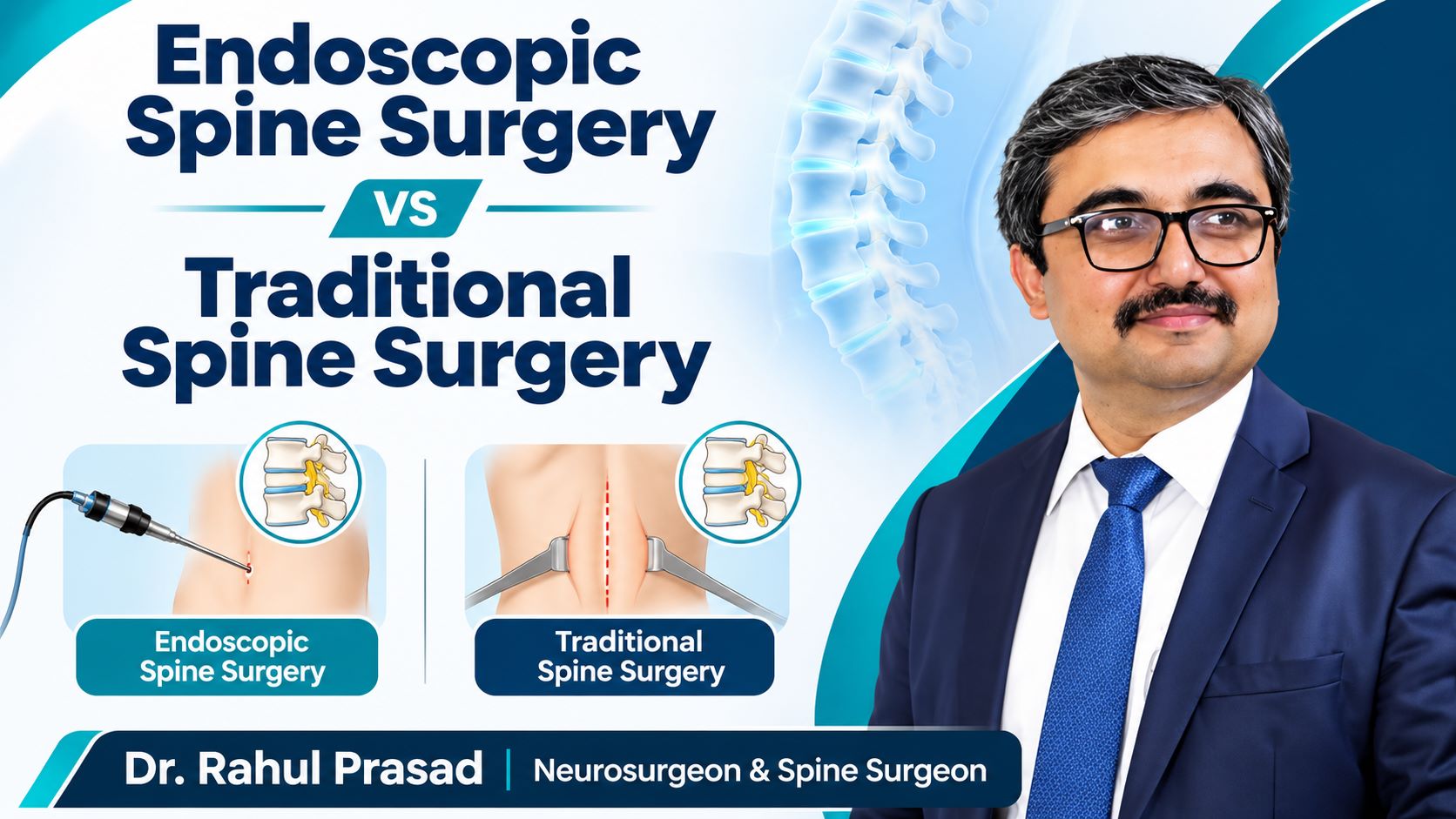
Being told you need spine surgery is unsettling. The next thing most people want to know is how it will be done. Will it mean a long scar and weeks in bed, or can it be done through a small keyhole?
That question is really about two different approaches: endoscopic spine surgery and traditional (open) spine surgery. Both can relieve pressure on a trapped nerve. They differ in how much tissue the surgeon disturbs on the way in, and in which spine problems each one handles well. This guide explains the difference, what the research shows, who suits each approach and what to ask your surgeon before you decide.
Quick answer: Endoscopic spine surgery treats the spine through a cut of about one centimetre, using a thin camera and fine instruments, and moves muscle aside instead of cutting it. Traditional open surgery uses a larger incision so the surgeon can see the spine directly. For suitable problems such as a slipped disc or narrowing at one or two levels, endoscopic surgery usually means less tissue damage, a shorter hospital stay and a quicker return to daily life, with similar pain relief. Open surgery is still the better choice for spinal instability, deformity, many tumours and disease spread over several levels.
What Is Traditional (Open) Spine Surgery?
In open spine surgery, the surgeon makes an incision over the affected part of the spine, usually several centimetres long. The back muscles are lifted away from the bone and held aside so the surgeon can see and work on the spine directly. Common open operations include discectomy (removing the part of a disc pressing on a nerve), laminectomy (removing bone to widen a narrowed canal) and spinal fusion (joining vertebrae with screws and rods).
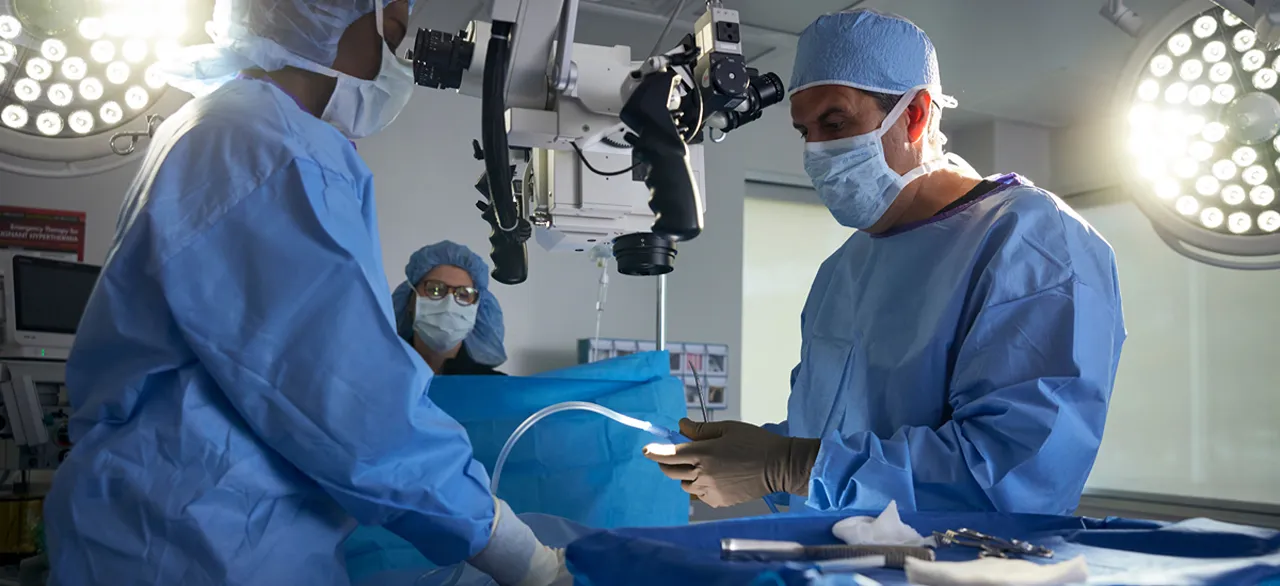
Open surgery has been used for decades and remains the standard for many complex conditions. Its main drawback is the access route: lifting large areas of muscle causes more pain after surgery, more blood loss and a longer recovery. Microdiscectomy, which uses a microscope through a smaller opening, sits between open and endoscopic surgery.
What Is Endoscopic Spine Surgery?
Endoscopic spine surgery is the least invasive form of minimally invasive spine surgery (MISS). The surgeon passes a pencil-thin endoscope, with its own camera and light, through a small cut to the problem area. The magnified image appears on a high-definition screen, and instruments passed through the scope remove the disc fragment, bone spur or thickened ligament pressing on the nerve. The muscles are gently separated rather than cut.
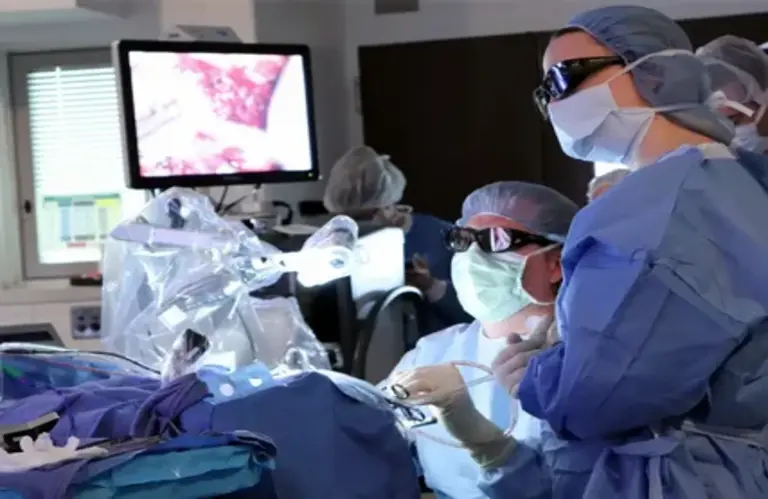
You may hear it called keyhole spine surgery. PSLD (Percutaneous Stenoscopic Lumbar Decompression) is one endoscopic technique used for lumbar stenosis and disc problems. Laser-assisted endoscopic surgery (SELD) adds a laser as a working tool through the scope; the laser is not a treatment on its own.
Endoscopic vs Traditional Spine Surgery Comparison
| Factor | Endoscopic spine surgery | Traditional (open) spine surgery |
|---|---|---|
| Incision | About 7–10 mm | Usually several centimetres |
| Muscle | Separated, largely preserved | Lifted off the bone and held aside |
| View | Magnified camera image on a screen | Direct view, sometimes with a microscope |
| Anaesthesia | Local with sedation or general, depending on the technique | Usually general |
| Blood loss | Usually minimal | Higher |
| Hospital stay | Often same day or next day | Usually a few days; longer after fusion |
| Getting up | Often walking within hours | Usually within a day or two |
| Return to desk work | Often within 1–3 weeks | Often several weeks; months after fusion |
| Best suited for | Disc herniation, stenosis at one or two levels, foraminal stenosis, some repeat herniations | Instability, deformity, tumours, severe fractures, extensive infection, multi-level disease |
These are typical ranges, not promises. Your age, overall health, the condition being treated and the exact procedure all change the picture.
What Does the Research Say?
For lumbar disc herniation, which has been studied most, the evidence is broadly encouraging. A 2016 meta-analysis of randomised trials concluded that endoscopic discectomy is a safe and adequate alternative to standard open discectomy. Another meta-analysis comparing it with microdiscectomy found it did better on disability scores, complications and hospital stay, and was no worse on other measures.
There is a trade-off that few patient guides mention. Some pooled analyses report a higher chance of the disc herniating again after endoscopic discectomy. One 2021 meta-analysis put the risk at roughly 1.6 times that of other operations. Reviews also stress that results depend heavily on choosing the right patient and on the surgeon’s experience, because the technique takes years to master.
The practical message: endoscopic surgery can match open surgery for the right condition in experienced hands, but it is not automatically better for everyone.
Who Is The Perfect Patient For Endoscopic Spine Surgery?
The decision always rests on your symptoms, an examination and an MRI that matches them. Endoscopic surgery is often considered for:
- Slipped or herniated disc causing leg pain (sciatica) that has not improved with 6–12 weeks of medicines, physiotherapy and activity changes
- Lumbar spinal stenosis at one or two levels, where leg pain or heaviness comes on while walking and eases on sitting or bending forward
- Foraminal stenosis, where a nerve is pinched as it leaves the spine
- Some cases of a disc herniating again after earlier surgery
- Some older patients or those with other illnesses, where a smaller operation may be easier on the body
Most back pain does not need surgery. Surgery is usually considered when nerve pain persists despite proper non-surgical care, or when weakness is getting worse.
When Traditional Open Surgery Is Still the Better Choice
A good spine surgeon picks the operation that fits the problem, not the other way round. Open or other approaches are often preferred for:
- Spinal instability or spondylolisthesis needing a fusion with screws (endoscopic fusion exists but suits only selected cases)
- Scoliosis and other deformities needing correction
- Spinal tumours and severe fractures
- Extensive spinal infection needing wide cleaning
- Nerve compression spread over several levels
Even during a planned endoscopic procedure, the surgeon may occasionally need to switch to an open approach for safety. Ask about this beforehand. Complex spine surgery covers these situations.
Is Endoscopic Spine Surgery Safe? Understanding the Risks
Endoscopic surgery is generally considered safe when well indicated, but no spine operation is risk-free. Possible risks with either approach include a tear in the covering of the nerves (dural tear), nerve irritation or injury, infection, bleeding, incomplete relief and recurrence. A small incision lowers the chance of wound problems but does not remove it. Your surgeon should explain your personal risk before you consent.
Recovery: What to Expect After Each Approach
After endoscopic surgery, many patients walk within hours and go home the same day or the next morning. Leg pain often eases early, although numbness can take longer to settle. Light desk work may be possible within one to three weeks. Heavy lifting, bending and twisting are usually avoided for several weeks, and a physiotherapy programme helps protect the disc.
After open discectomy or laminectomy, a hospital stay of a few days is common, with a gradual return to work over several weeks. After fusion, bones need months to join, so recovery is longer.
Cost of Endoscopic vs Open Spine Surgery in India:
There is no single price. The cost depends on the procedure, number of levels, whether implants are used, the hospital and room category, and your insurance. Endoscopic surgery uses specialised equipment, which can raise the surgical cost. A shorter stay and earlier return to work may offset part of this. Most health insurance policies cover medically necessary spine surgery, but check day-care coverage with your insurer or TPA and ask the hospital for a written estimate.
Questions to Ask Your Spine Surgeon
- Which operation do you recommend for my MRI findings, and why?
- Am I a candidate for endoscopic surgery? If not, what makes open surgery better for me?
- What results can I realistically expect, and what are my specific risks?
- How often do you perform this procedure?
- What will recovery look like for my job and daily routine?
Consult a Spine Surgeon in Siliguri – Dr. Rahul Prasad
Dr. Rahul Prasad is a Senior Neurosurgeon and Spine Surgeon at Yuvaan Hospital, Siliguri. He holds an MS in General Surgery (BHU) and an MCh in Neurosurgery (G.B. Pant Hospital, New Delhi). He completed a clinical fellowship in minimally invasive and complex spine surgery at Temple University Hospital, USA, and a fellowship in endoscopic and laser spine surgery (PSLD and SELD) in South Korea.
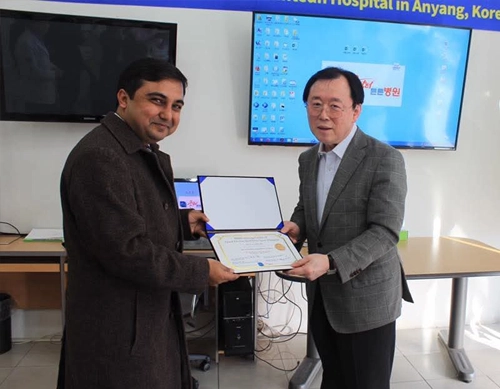
He performs endoscopic, laser-assisted, minimally invasive and complex open spine surgery, so the recommendation can follow your condition rather than a single technique. He sees patients from Siliguri and across North Bengal, including Darjeeling, Jalpaiguri and Cooch Behar, as well as Sikkim.
If you have persistent back or leg pain, or have been advised spine surgery and want a clear explanation of your options, bring your MRI and previous reports to a consultation. Book an appointment, or find Dr. Rahul Prasad on Google for directions. OPD hours: Monday to Saturday, 10 AM to 6 PM.
Seek urgent medical care if back pain comes with loss of bladder or bowel control, numbness around the groin or inner thighs, or rapidly worsening leg weakness. These can signal serious nerve compression that needs emergency treatment.
Frequently Asked Questions:
Is endoscopic spine surgery better than traditional spine surgery?
For suitable conditions such as a lumbar disc herniation or stenosis at one or two levels, endoscopic surgery usually offers less tissue damage and a faster recovery with similar pain relief. For instability, deformity, tumours or multi-level disease, open surgery is often the better option.
Is endoscopic spine surgery painful?
You will not feel pain during the procedure because of anaesthesia. Afterwards, there is usually some soreness at the small incision, which is typically less than after open surgery and is managed with oral pain medicines.
How long is the hospital stay after endoscopic spine surgery?
Many patients go home the same day or the next day. The exact stay depends on your health, the procedure and how quickly you are walking comfortably.
Can a slipped disc come back after endoscopic surgery?
Yes. A disc can herniate again after any discectomy, and some studies report a slightly higher rate after endoscopic discectomy. Good posture, core strengthening and avoiding heavy lifting during early recovery help lower the risk.
Is endoscopic spine surgery done under general anaesthesia?
It depends on the technique and the patient. Some endoscopic procedures can be done under local anaesthesia with sedation; others use general anaesthesia. Your surgeon and anaesthetist will advise which is safer for you.
Does every slipped disc need surgery?
No. Many disc-related pain episodes improve within weeks with medicines, physiotherapy and activity changes. Surgery is usually considered when nerve pain persists despite proper treatment, or when weakness is worsening.
*Medical disclaimer: This article is for general information and does not replace a consultation with a qualified doctor. Treatment decisions should be based on an individual examination and imaging, Book an appointment